Trichoglossus moluccanus
Meet the Rainbow Lorikeet
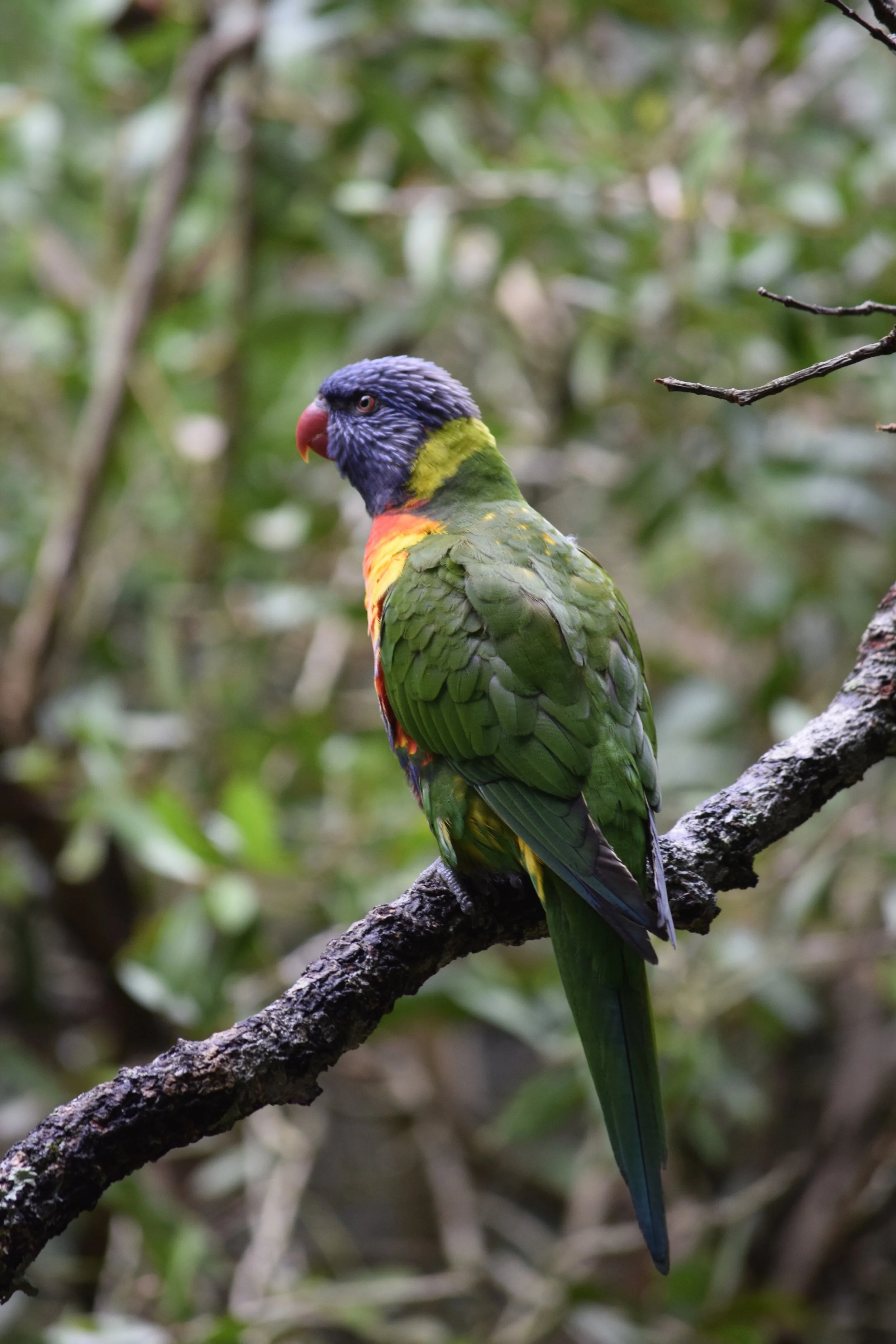
Bright, noisy and unmistakable, the Rainbow Lorikeet is one of Australia’s most recognisable parrots.
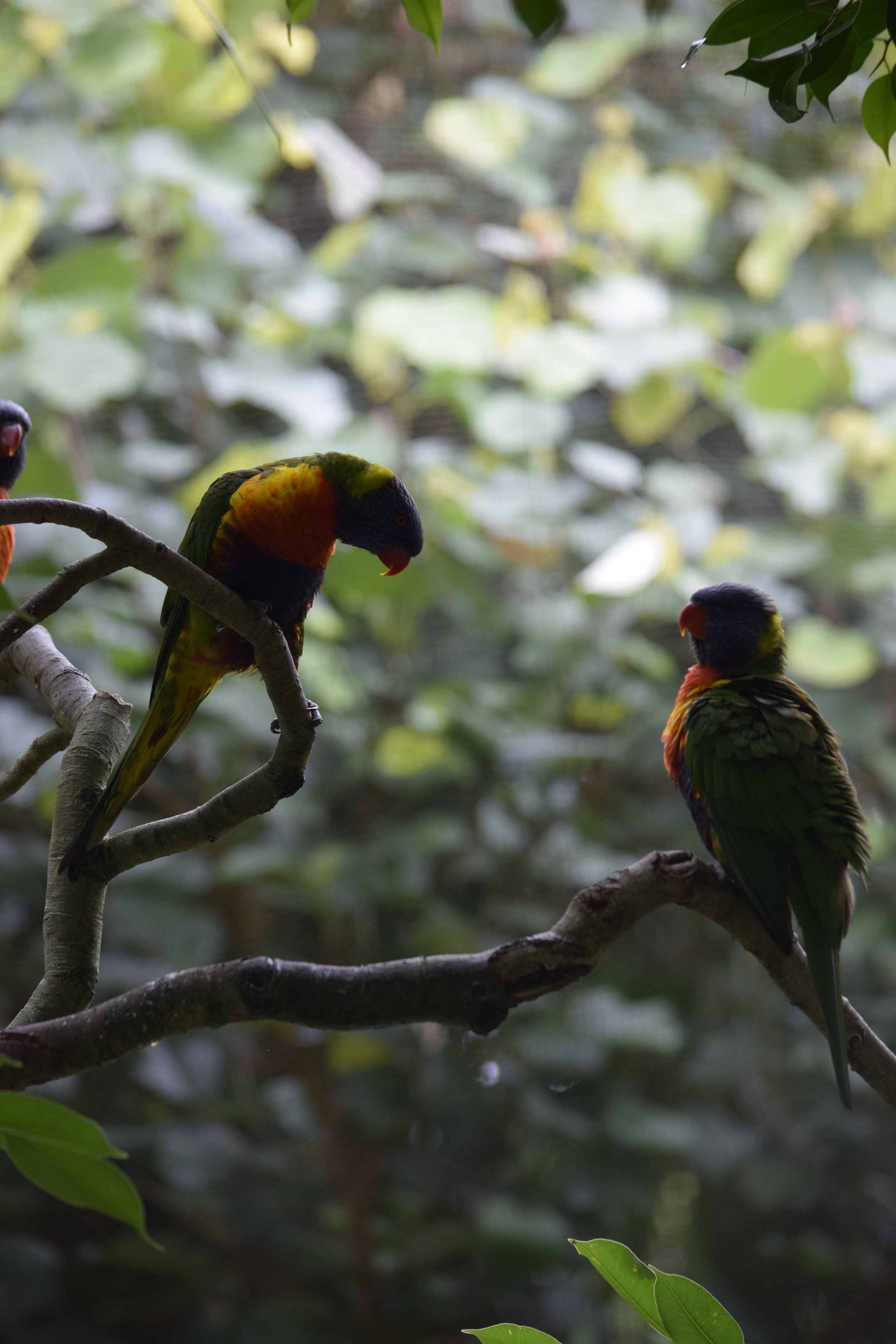
Its brilliant blue head, green wings and back, orange-yellow breast and red bill make it easy to identify. Males and females look very similar, and groups are often heard before they are seen as they move quickly between flowering trees.
Rainbow Lorikeets are highly adaptable. They occur in forests, woodlands and coastal areas, but have also become a familiar sight in well-treed towns and cities where flowering native and introduced plants provide abundant food.
What They Eat
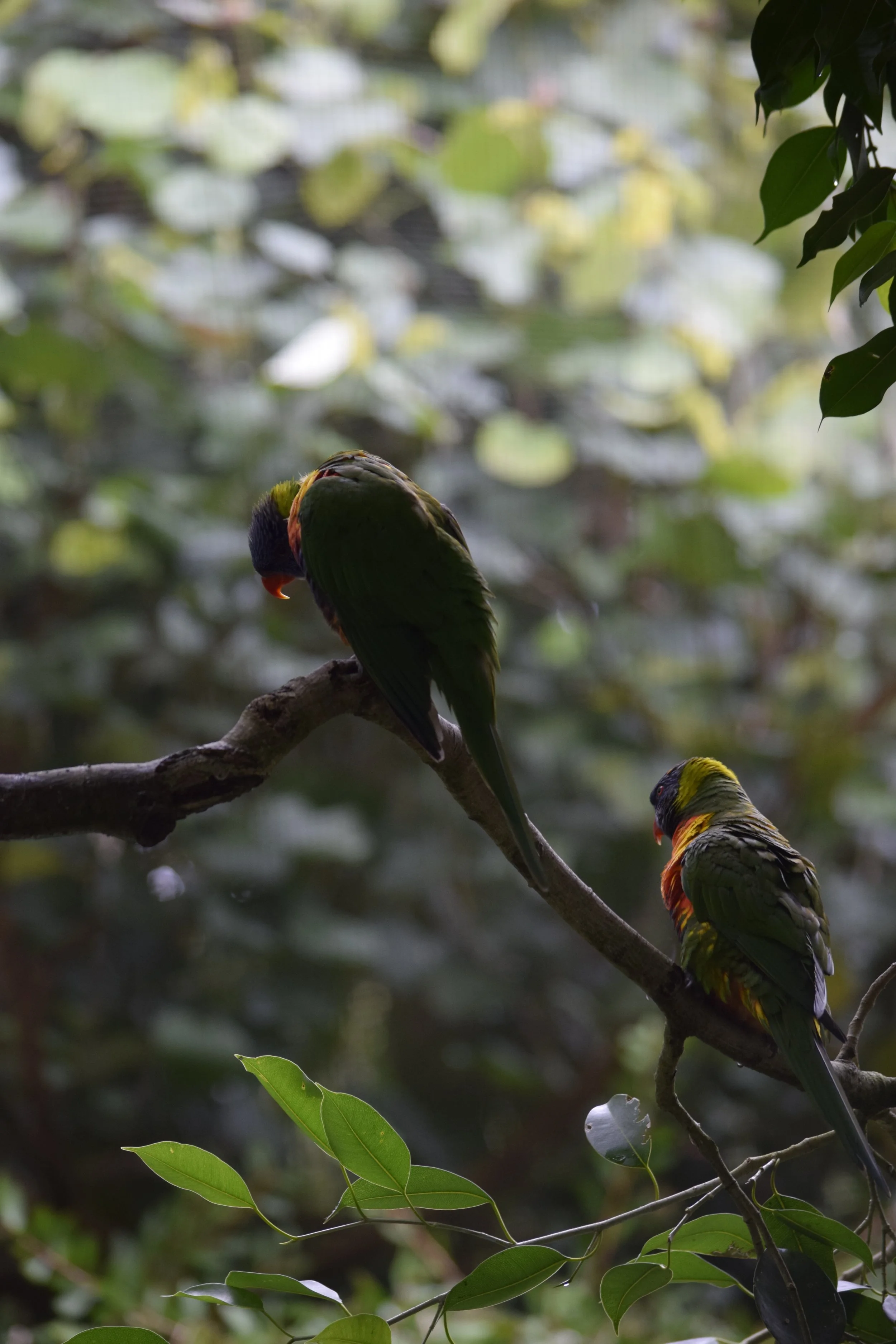
Flowers are central to the life of a Rainbow Lorikeet.
Unlike parrots that primarily rely on seeds, Rainbow Lorikeets are specialised for feeding on nectar and pollen. Their tongue is tipped with tiny brush-like structures that help collect food from flowers.
They also consume fruit, seeds and some insects, allowing them to take advantage of a variety of food sources when flowering conditions change.
This close relationship with flowering plants also gives lorikeets an ecological role beyond simply finding a meal. As they move between flowers, pollen can be transferred between plants.
Life and Behaviour
Rainbow Lorikeets are highly social birds and are frequently seen travelling, feeding and roosting in groups.
Their calls are loud and distinctive, ranging from screeches in flight to constant chatter around feeding and roosting areas.
They are agile feeders and spend much of their time among the outer branches and foliage of trees. Their strong feet and curved bills allow them to climb around branches while reaching flowers and fruit.
Large numbers may gather where food is particularly abundant, and communal roosts can contain many birds.
Breeding and Life Cycle
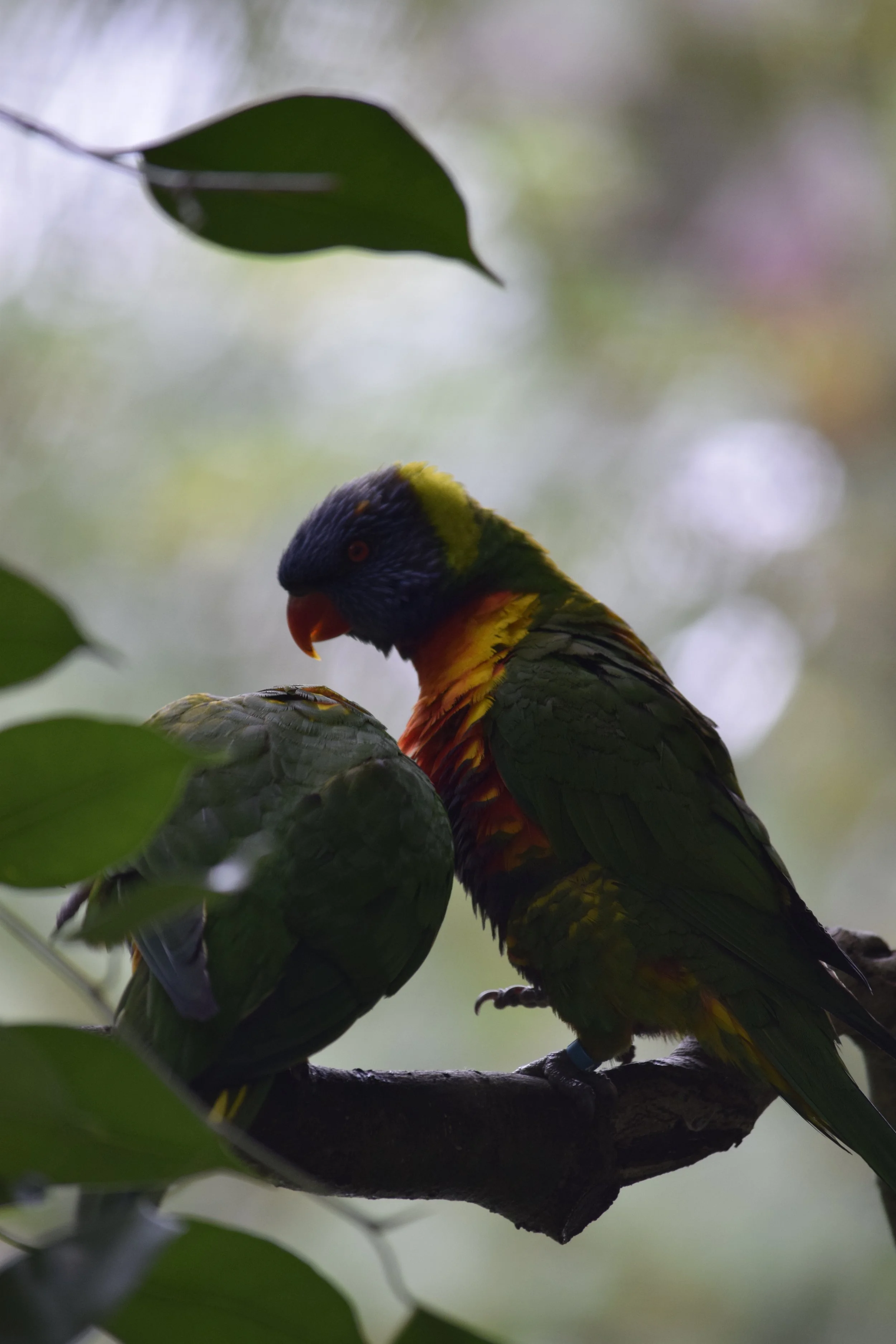
Rainbow Lorikeets are hollow-nesting birds.
Natural nest sites are usually cavities in trees, including hollow limbs of eucalypts. Both parents help prepare the nesting cavity and later feed the young, although the female performs the incubation.
A typical clutch contains two eggs, which are incubated for around 23 days. Young remain in the nest for approximately 45 days before fledging and continue to receive food from their parents for a period afterwards.
Breeding timing varies across their range according to climate and food availability. In southern Australia, breeding generally occurs during the warmer part of the year.
Their Role in the Ecosystem
Rainbow Lorikeets are closely connected to Australia's flowering landscapes.
By feeding on nectar and pollen and travelling between flowering plants, they can contribute to pollination. They also form part of a much larger ecological community competing for food, nesting hollows and other resources.
Those relationships also demonstrate why the same species can have very different ecological effects depending on where it occurs.
Within its natural range, the Rainbow Lorikeet is part of an established Australian ecosystem.
When introduced outside that range, however, it can compete with locally native wildlife for limited resources.
Conservation
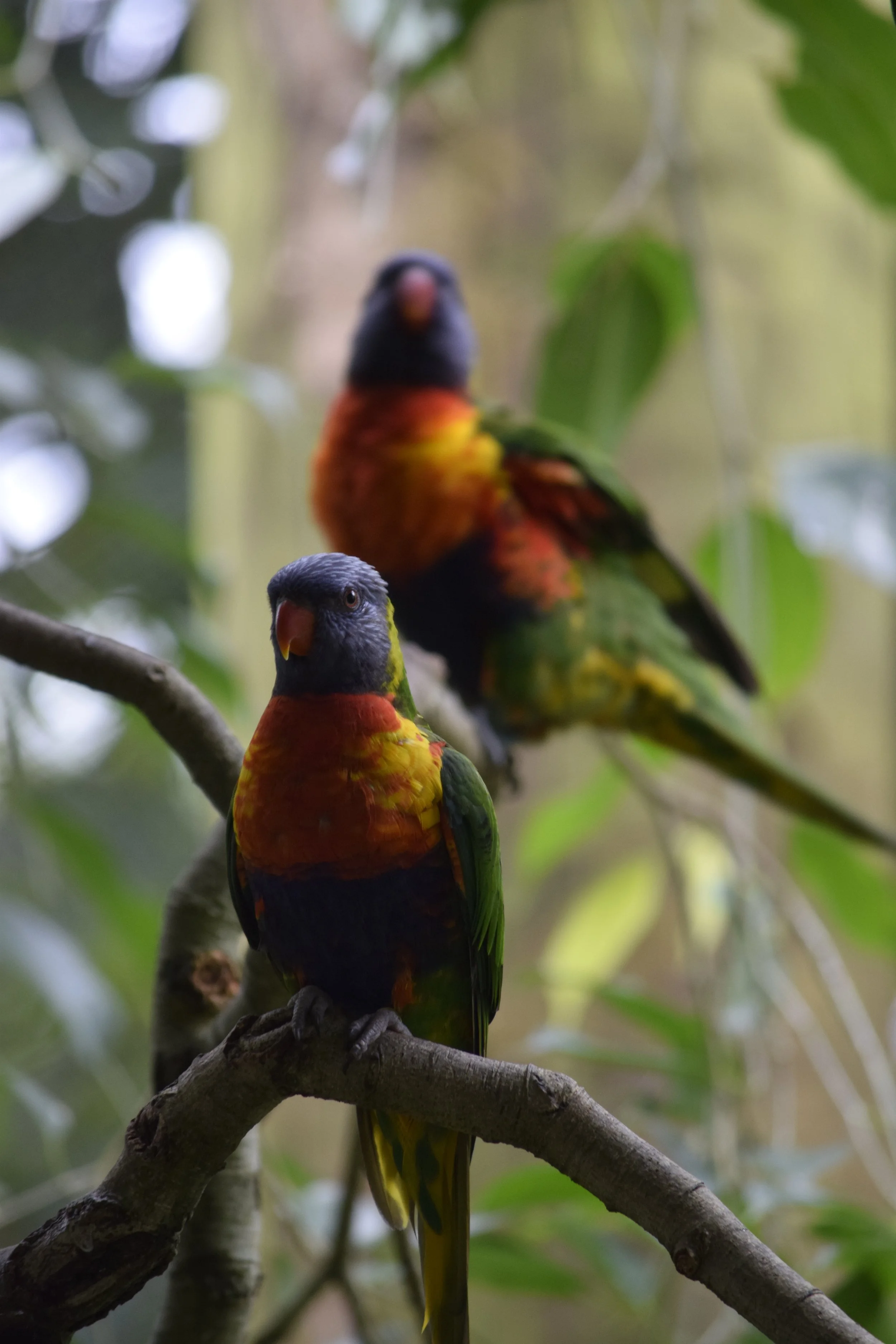
Across its natural Australian range, the Rainbow Lorikeet remains widespread and is currently classified globally as Least Concern.
The species has adapted particularly well to urban environments, where flowering garden plants and artificial food sources can provide additional feeding opportunities.
However, conservation is not always simply about whether a species is common or threatened. Where Rainbow Lorikeets have established outside their natural range, their adaptability can create conservation challenges for native wildlife.
In Tasmania
The Rainbow Lorikeet presents an interesting conservation story because it is native to Australia, but not native to Tasmania.
Small self-sustaining populations now occur in several parts of Tasmania, including the greater Hobart, Launceston, Devonport and Burnie areas. While occasional birds may naturally reach Tasmania from mainland Australia, Biosecurity Tasmania considers escaped or released captive birds to be the predominant origin of established populations.
Their establishment is a concern because Rainbow Lorikeets can compete with Tasmanian parrots for food and other resources, including species such as the Musk Lorikeet, Green Rosella and threatened Swift Parrot. They may also present a disease risk and can affect fruit-growing industries.
Rainbow Lorikeets are prohibited from importation into Tasmania, and Biosecurity Tasmania encourages the public to report sightings, particularly where birds appear in new areas.
This makes the Rainbow Lorikeet a useful reminder that the conservation story of a species depends not only on what the animal is, but where it occurs.
Did You Know?
Rainbow Lorikeets have specialised brush-tipped tongues adapted for collecting nectar and pollen.
Males and females have very similar plumage and generally cannot be distinguished simply by looking at them.
They usually nest in tree hollows rather than constructing an exposed nest.
Although native to mainland Australia, established Rainbow Lorikeet populations in Tasmania are considered introduced.
How You Can Help
If you are in Tasmania, recording Rainbow Lorikeet sightings can help improve knowledge of their distribution.
Useful observations include the location, number of birds and what they were doing, such as feeding, roosting or investigating a nest hollow.
Biosecurity Tasmania accepts records through platforms including the Natural Values Atlas, Atlas of Living Australia and iNaturalist.
References
Government
Department of Natural Resources and Environment Tasmania. Rainbow Lorikeet. Biosecurity Tasmania.
NRE Tasmania Rainbow Lorikeet information
Organisations
Australian Museum. Rainbow Lorikeet, Trichoglossus moluccanus.
Australian Museum species profile
BirdLife Australia. Rainbow Lorikeet.
BirdLife Australia species profile